
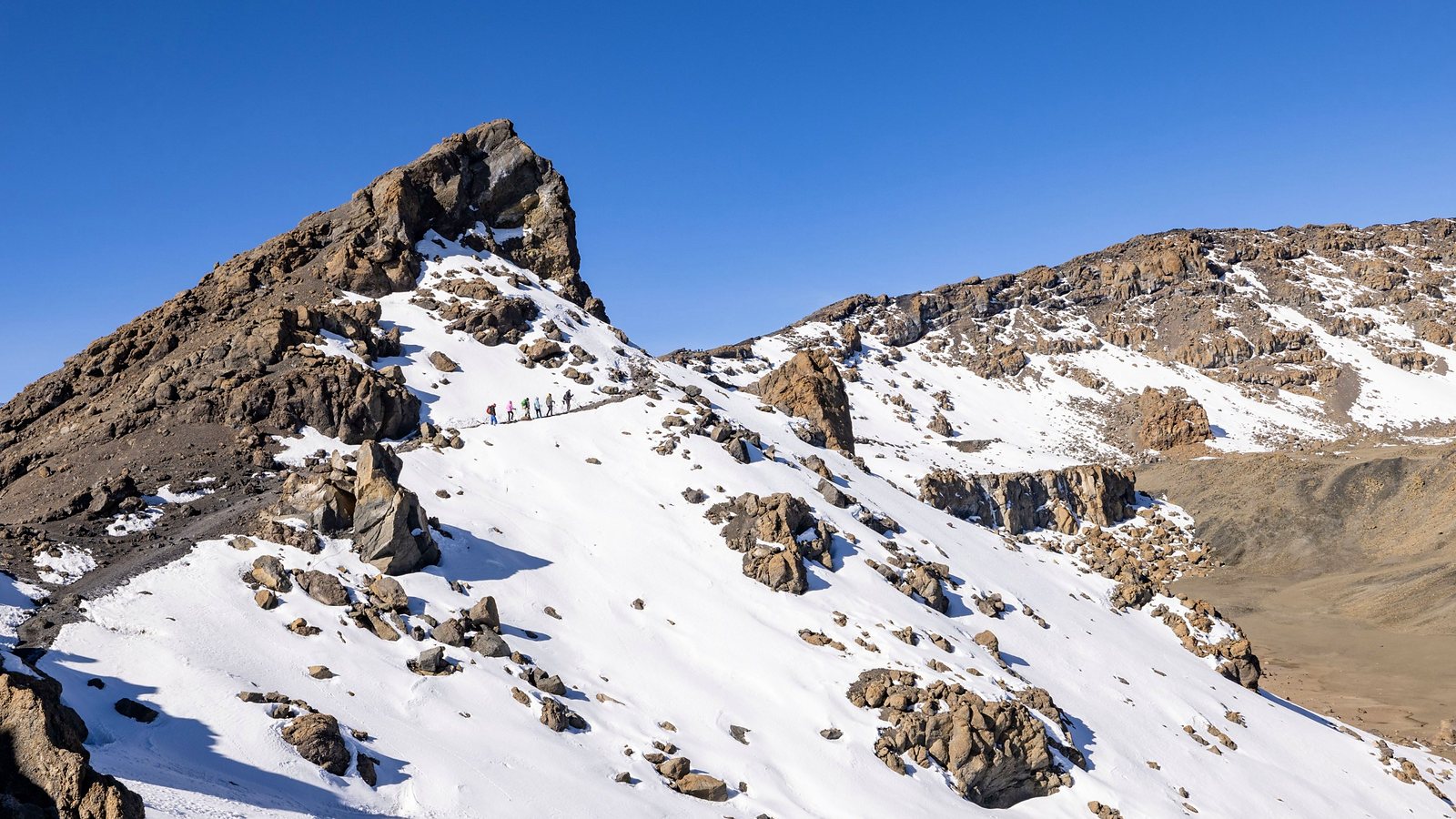
Kilimanjaro is a dormant volcano with three cones: Kibo, the highest, with Uhuru Peak on its crater rim; Mawenzi; and Shira. The climb passes through rainforest, heath and moorland, alpine desert and finally the arctic summit zone.
Fitness helps, but the real challenge is altitude. The route and the number of days you choose matter more than anything else.
Choosing a route
Longer routes that follow a 'climb high, sleep low' profile, such as Lemosho and Machame, give the body time to adapt. Marangu offers huts instead of tents, Rongai approaches from the drier north, and Umbwe suits experienced, acclimatised hikers.
Preparing for the climb
- Build fitness with long walks and days with height gain.
- Break in your boots before you travel.
- Choose enough days to acclimatise and walk slowly.
- Speak to a travel-health clinic about altitude and your health.
- Pack warm layers: summit nights are well below freezing.
Climb and safari
Many guests climb first and relax on safari afterwards. Climbing Mount Meru beforehand is an excellent way to acclimatise.
Best time to climb Kilimanjaro
BestGoodQuieter or rainy
The drier months, roughly January to early March and June to October, are the most popular. Climbing is possible in other months with good rain gear; April and May are the wettest.