

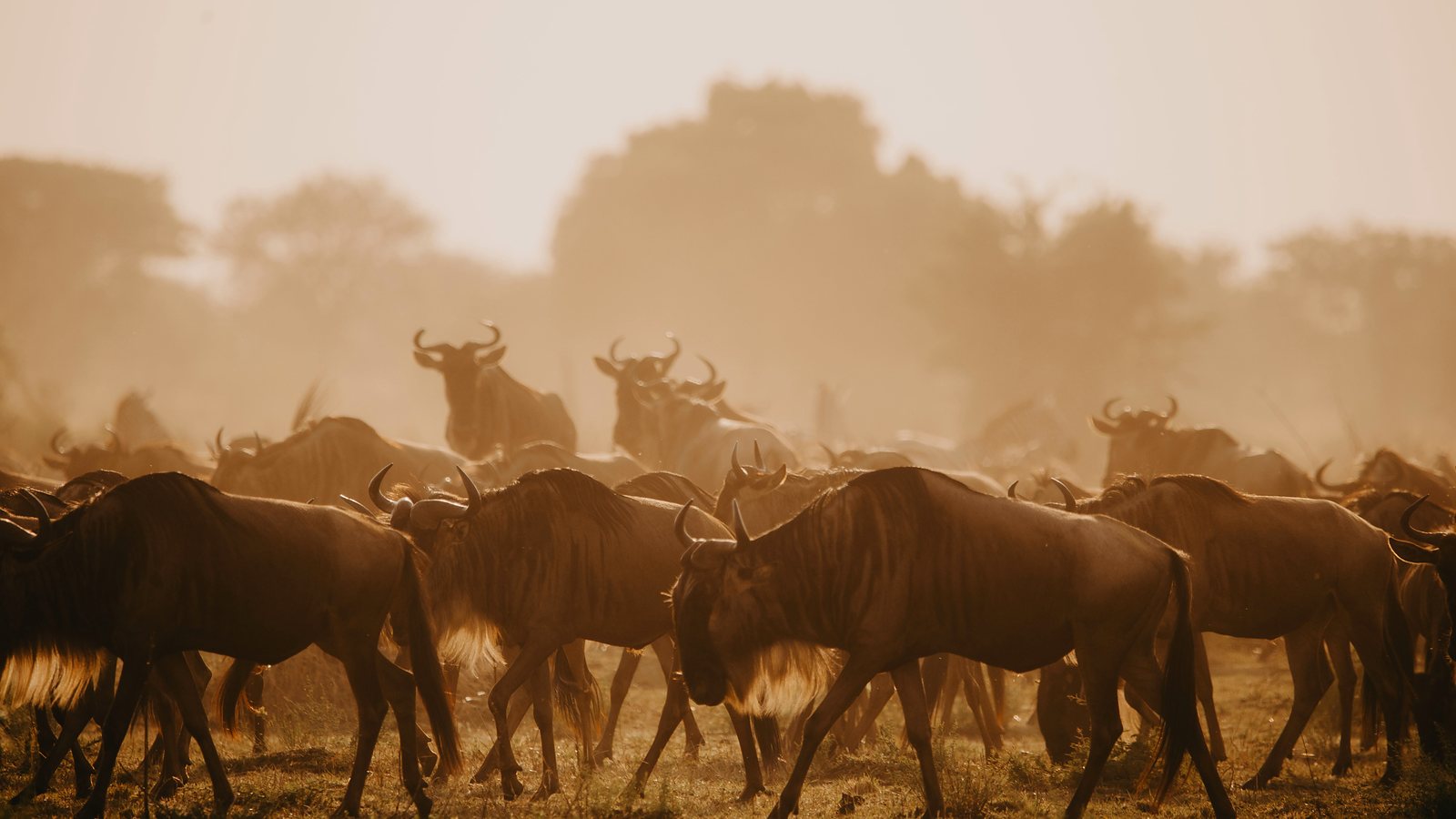
When is the best time to see the Great Migration?
The Great Migration is a year-round cycle. The best time depends on which part of it you want to see.
A year-round movement
More than a million wildebeest, with zebra and gazelle, move in a loop through the Serengeti ecosystem, following rain and fresh grazing. The timing shifts every year with the rains, so we plan by region rather than by fixed dates.
Month by month
- December to March: on the southern plains around Ndutu; calving peaks in February.
- April and May: moving north-west through the central Serengeti during the long rains.
- June and July: in the western corridor and central Serengeti; Grumeti River crossings are possible.
- July to October: in the Northern Serengeti, crossing the Mara River back and forth.
- November: moving south again with the short rains.
Calving or crossings?
Calving offers enormous herds and high predator activity in open country. River crossings offer drama at the water's edge, but they cannot be scheduled and may require long waits. Read our guides to calving and Mara River crossings.
Planning
Two or more nights in the right area matter more than the exact date. See our Great Migration safaris, each planned around one of these phases.
Frequently asked questions
Can I see the migration in one day?
In the right area and season you can see large herds on a single game drive, but crossings need time. Two nights or more are recommended.
Is the migration guaranteed?
The herds are always somewhere in the ecosystem, but their exact position and any crossing cannot be guaranteed.
Start planning your Tanzania safari
Tell us when you would like to travel and what matters most to you. We will suggest a route that fits.
