
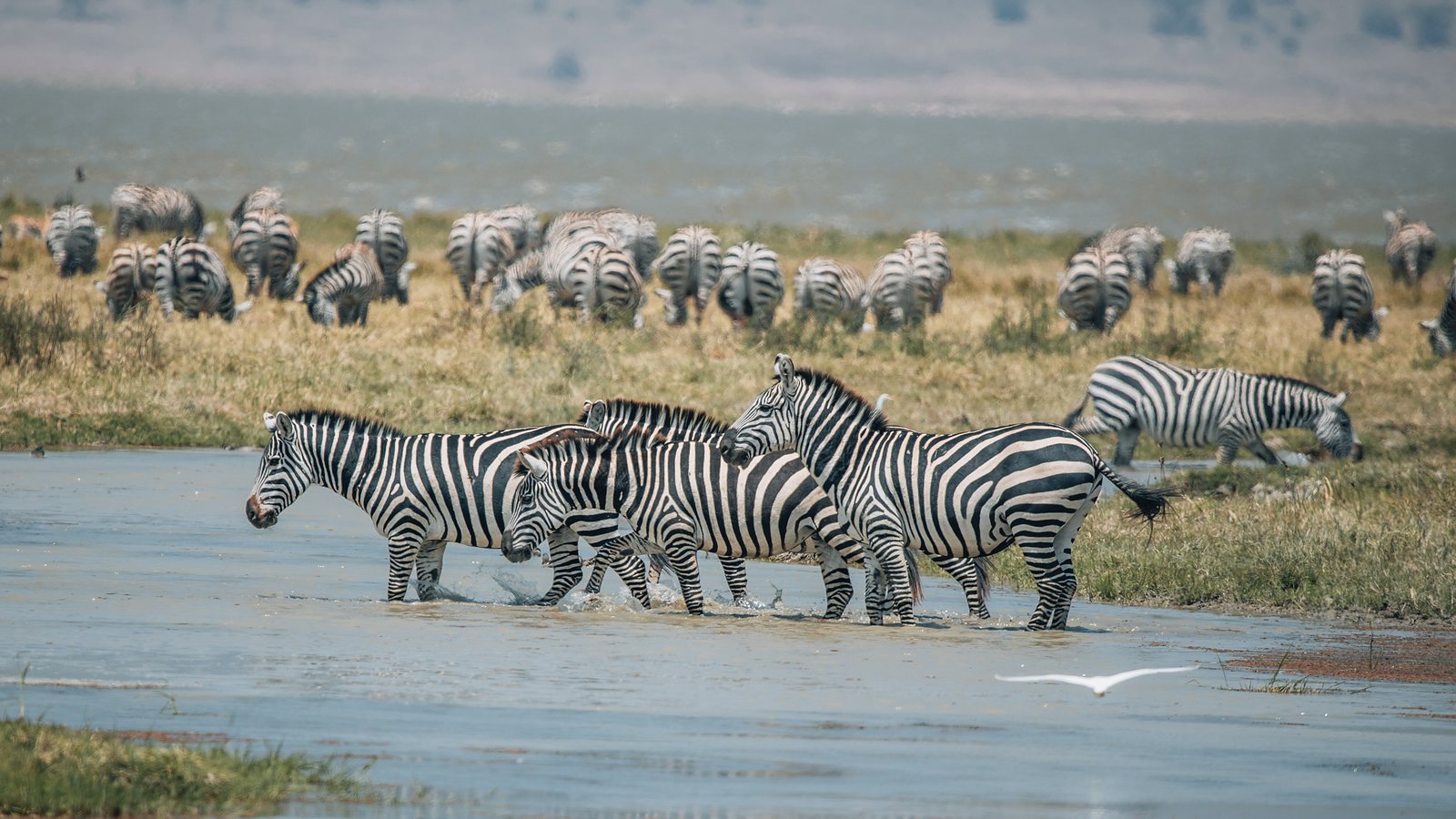
Zebras and wildebeest gathering at the water's edge

Ngorongoro Conservation Area · UNESCO World Heritage

Ngorongoro Crater safari guide

A collapsed volcano with a permanent supply of water and grazing, and one of the most concentrated wildlife areas in Africa.

Protected areaCrater floor about 260 km² in an 8,292 km² conservation area
From ArushaAbout 3–4 hours by road
Best forBlack rhino, lions, a full day of game in one place
Suggested stay1–2 nights on the rim or in Karatu

The Ngorongoro Crater is a volcanic caldera about 19 kilometres across, with walls rising up to around 600 metres above a floor of grassland, swamp, forest and a shallow soda lake. It lies within the Ngorongoro Conservation Area, where Maasai pastoralists live alongside wildlife, a model of land use found nowhere else among Tanzania's major protected areas.

Because water and grazing are available all year, most of the animals stay, and a single game drive on the crater floor can include lion, buffalo, elephant, hyena and black rhino.

Why visit the Ngorongoro Crater

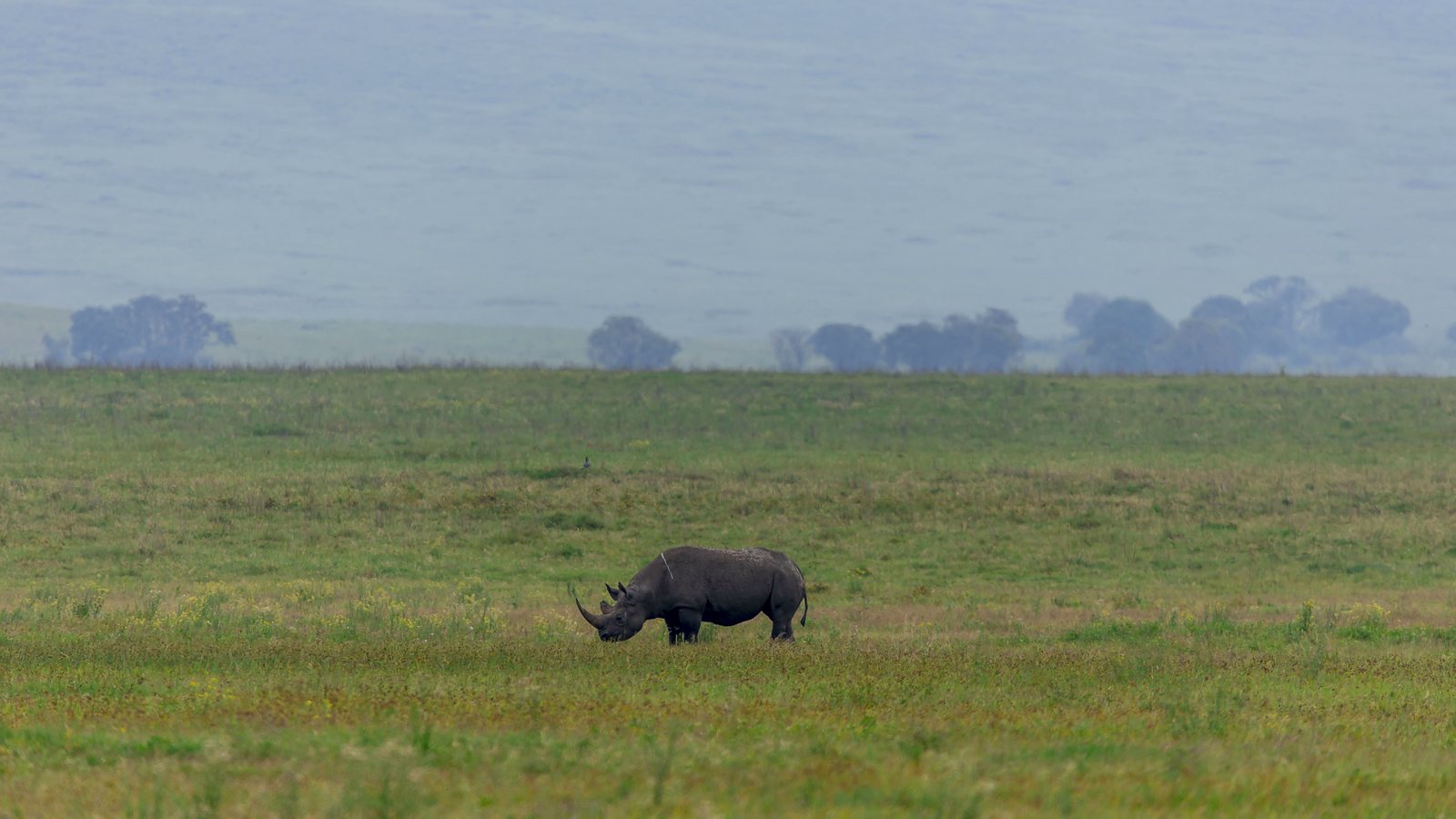
The crater offers the best chance in northern Tanzania of seeing the endangered black rhino, usually at a distance across open grassland. Lions and spotted hyenas are common, and elephant bulls feed in the Lerai fever-tree forest. Few places let you see so much in one morning.

Inside the crater

  • Lerai Forest: yellow fever trees, elephants and often rhino nearby.
  • Lake Magadi: a shallow soda lake that attracts flamingos when conditions suit them.
  • Ngoitokitok Springs: a picnic site with hippos in the pool.
  • Mandusi Swamp: reeds and water that draw buffalo, elephant and birds, especially in the dry season.

Giraffes are absent from the crater floor; the steep walls keep them out. You will see them in Tarangire and the Serengeti.

How a crater day works

Vehicles enter by a descent road and leave by an ascent road. Time on the crater floor is limited to about six hours per visit, so we descend as early as the gates allow and have lunch at a designated picnic site. At the picnic sites, eat inside the vehicle: black kites have learned to take food from hands.

The rim sits at around 2,300 metres, so early mornings are cold, especially from June to August. Read our practical crater guide.

Beyond the crater

The wider conservation area includes Olduvai Gorge, one of the world's most important sites for the study of human origins, with a small museum on the road to the Serengeti; the Empakaai crater and its lake, reached on foot; and, in the south-west, the calving plains around Ndutu.

Best time to visit the Ngorongoro Crater

BestGoodQuieter or rainy

The crater is productive all year because its wildlife does not migrate. June to October is dry and busy, with the clearest views. December to March is green and pairs well with the calving season at Ndutu. April and May bring the heaviest rain and the fewest visitors.

Whatever the month, the early morning is the best time on the crater floor.
Safaris that include the Ngorongoro Crater

Private itineraries with published per-person prices. Each can be adjusted to your dates, pace and budget.

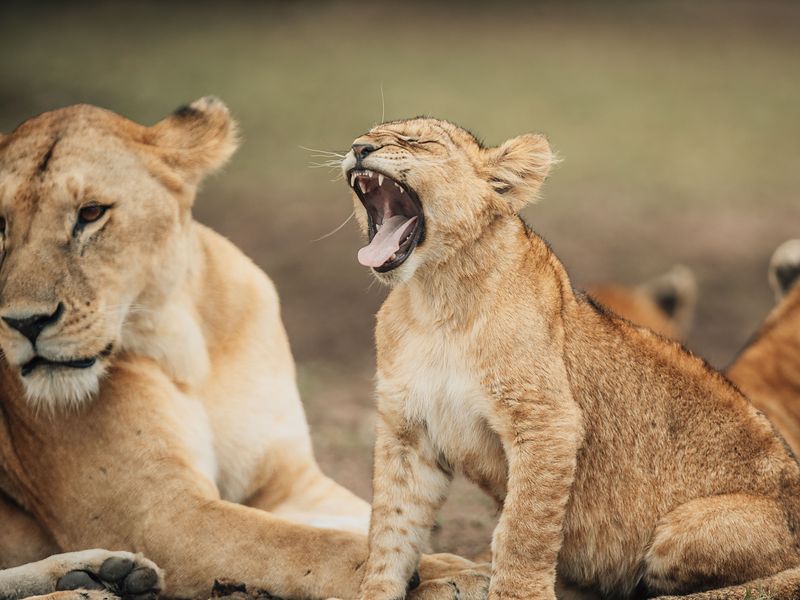
A pride of lions resting, one lioness yawning Big Five Safari

5 days / 4 nights. PrivateMid-range

5-Day Classic Northern Circuit Safari

Tarangire · Central Serengeti · Ngorongoro Crater +1

  • Ngorongoro Crater game drive

From$1,542per person

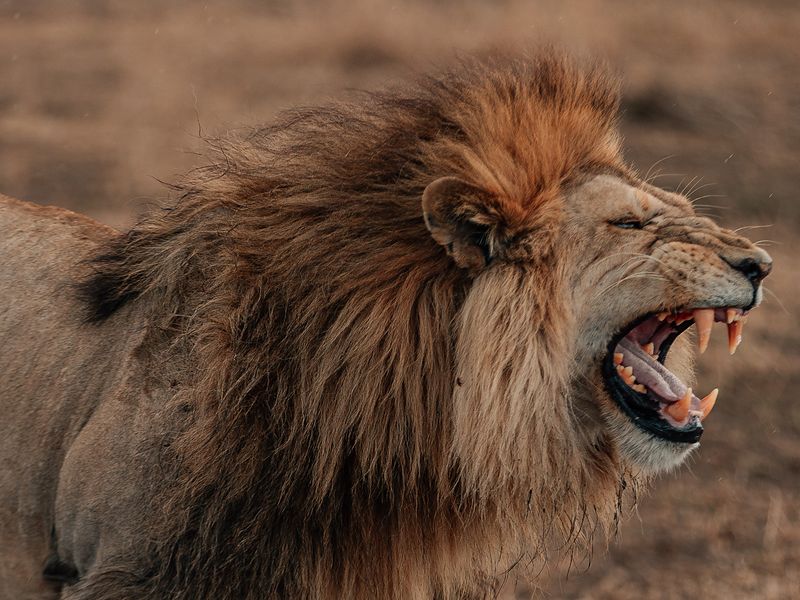
A male lion with a dark mane, snarling Great Migration

12 days / 11 nights. PrivateMid-range

12-Day Tanzania Wildlife & Cultural Safari

Serval Wildlife · Tarangire · Ngorongoro Crater +4

  • Time in the northern Serengeti
  • Hadzabe & Datoga cultural visit

From$3,330per person

Where to stay

Lodges and camps we use in this area. We choose by location first, then comfort and service.

Ang'ata Ngorongoro Camp
Embalakai Tented Camp
Ngorongoro Safari Lodge
Ngorongoro Serena Lodge
Ngorongoro Sopa Lodge
Rhino Lodge
Rhino Lodge
Ngorongoro by Meliá Collection
Ngorongoro Crater Lodge
See all accommodation

Frequently asked questions

Still have questions?

Can we see all the Big Five in the crater?

It is possible but never guaranteed. Lion, buffalo and elephant are seen on most visits; rhino is usually seen at a distance; leopard is the hardest here.

How long can we stay on the crater floor?

Visits are limited to about six hours, enough for a thorough game drive with a picnic lunch.

Should we stay on the rim or in Karatu?

A rim lodge allows the earliest descent. Lodges in Karatu, about 45 minutes from the gate, cost less and suit most itineraries.

Is it very cold on the rim?

Mornings and evenings can be cold at around 2,300 metres. Bring a warm layer for the vehicle.

Plan your Ngorongoro Crater safari

Tell us when you would like to travel and what matters most. We reply personally with a suggested route and a clear price.

Email us